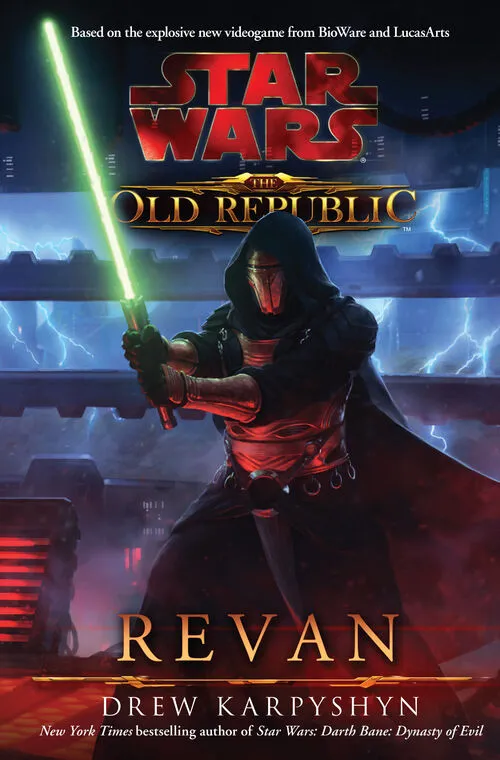
Hello everyone, Gungho Guns here from MANDO — the mustache of Mandalore, the cheekbones of Dromund Kaas, and the only man who can read one Revan chapter and immediately reinstall three Old Republic games like a completely stable adult. If you find yourself wanting to read the book, here is the link to buy it (click here).
| Category | Details |
|---|---|
| Book | Revan: Star Wars Legends — The Old Republic |
| Author | Drew Karpyshyn |
| Era | Old Republic / Legends |
| Connects To | KOTOR, KOTOR II, and SWTOR |
| Main Characters | Revan, Bastila Shan, Canderous Ordo, Meetra Surik, Darth Scourge |
| Main Villain | Darth Vitiate, the Sith Emperor |
| Review Style | Spoiler-heavy fan review |
| Gungho Rating | 9/10 |
Revan Book Review: The Missing Link Between KOTOR, KOTOR II, and SWTOR
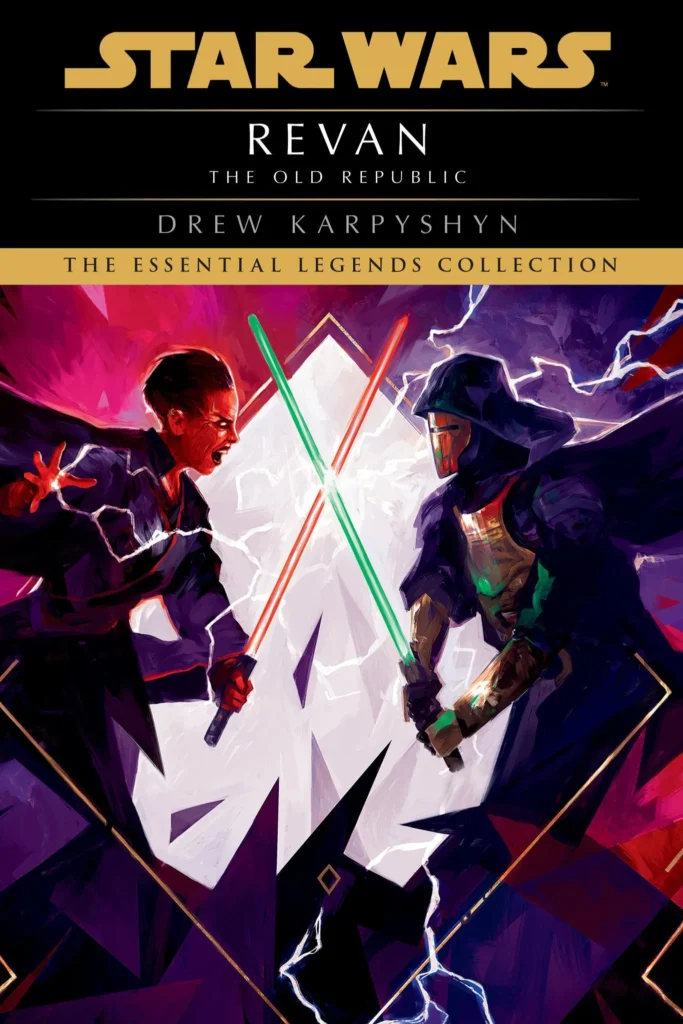
Before we go any further, massive spoiler warning.
And I mean massive.
If you have not played Knights of the Old Republic, KOTOR II, SWTOR, or read the Revan novel, turn back now. Go make tea. Go level a Jedi Knight. Go stare at Darth Malgus angrily for a while.
Because spoilers are ahead like a Sith ambush in a poorly lit hallway.
Now then.
I have played KOTOR. I have played KOTOR II. I have played SWTOR for around 15 years. I have lived through the Revanites, the Foundry, the Jedi Knight storyline, Shadow of Revan, Vitiate, Valkorion, and enough Old Republic drama to make a Jedi Council therapist retire early.
And after reading Revan by Drew Karpyshyn, I can say this:
Every serious KOTOR and SWTOR fan should read this book.
Is it perfect?
No.
Is it important?
Absolutely.
Is it one of the best bridges between a video game story and an MMO storyline that Star Wars has ever done?
Yes.
And does it make Revan feel like a hero, villain, legend, prisoner, husband, monster, savior, and walking identity crisis all at once?
Oh yes.
Beautiful nonsense.
Why This Matters
The Revan novel matters because it connects three massive pieces of Old Republic storytelling.
It explains what happened after KOTOR. It gives meaning to parts of KOTOR II. And it sets up key pieces of SWTOR, especially the Republic-side Jedi Knight storyline and the nightmare that is the Sith Emperor.
For a lot of fans, Revan is not just a character.
He is the character.
He is the mask. The mystery. The twist. The redeemed Sith. The fallen Jedi. The tactical genius. The man who fought Mandalorians, became a Sith Lord, came back to the light, and then somehow still had more trauma waiting in the cargo hold.
This book understands that Revan is not simple.
He is not Luke Skywalker with a cooler mask.
He is a storm of contradictions wearing a cape.
The Book Bridges KOTOR and SWTOR
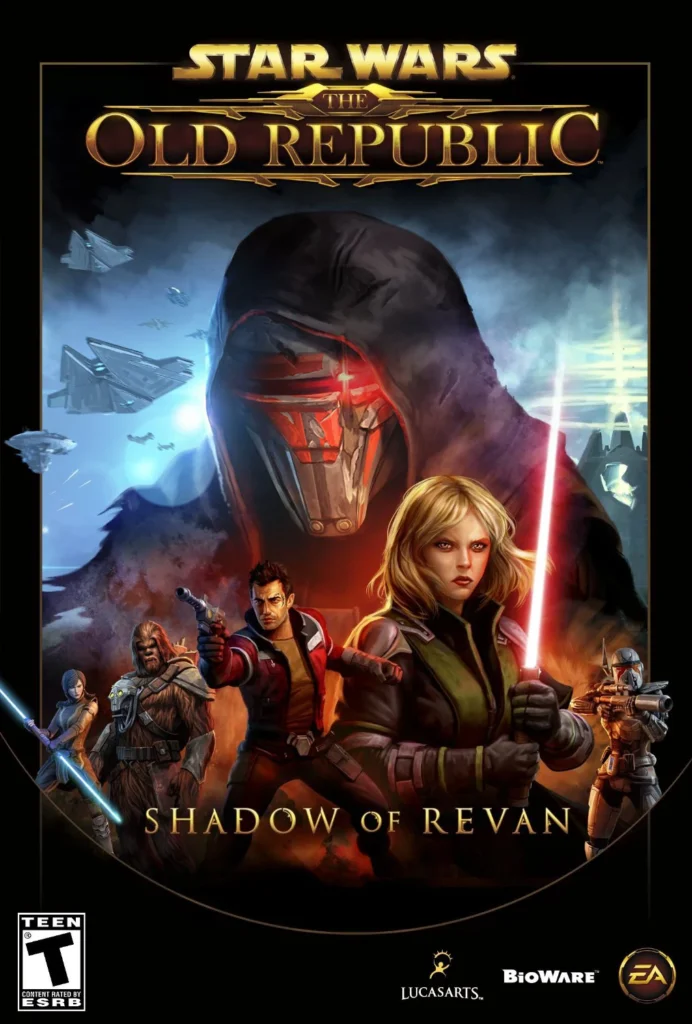
The best thing about Revan is that it finally answers the big question:
What happened to him?
At the end of KOTOR, Revan is redeemed. The Star Forge is destroyed. Bastila is saved. The Republic survives. Everyone claps. The music swells. Wonderful.
Then, in the wider Old Republic story, Revan disappears.
Lovely.
Nothing says “hero’s journey” like vanishing into the Unknown Regions while your pregnant wife is left behind and half the galaxy still thinks you are either a saint or a war criminal.
The novel fills in that gap. Revan is haunted by dreams and missing memories. He knows something terrible is out there, something connected to his fall, something hidden beyond Republic space.
So he goes looking.
Because of course he does.
Revan does not see a dark mystery and say, “Maybe I should ask for help and pack responsibly.”
No, Revan sees a dark mystery and immediately charges toward it like a Jedi with a warranty problem.
Revan Is Hero, Villain, Legend, and Hero Again
What I loved most is how the book refuses to make Revan clean.
He is not just a redeemed hero sitting around drinking caf with Bastila and polishing his mask.
He carries guilt.
He remembers pieces of who he was. He wrestles with what the Jedi did to him when they wiped his mind. And honestly, can we talk about that?
The Jedi literally erased the man’s memory.
That is not “guidance.”
That is not “balance.”
That is galactic brain surgery with a side of moral gymnastics.
But Revan also knows the mind wipe gave him a second life. Without it, he may never have found Bastila. He may never have become the man trying to save the galaxy again.
That tension is excellent.
Revan can be angry at the Jedi and still understand why they feared him. He can be a victim and still be responsible for his own darkness. He can be heroic and still terrifying.
That is why he works.
Revan is not one thing.
He is everything.
Canderous Ordo Brings the Mando Energy
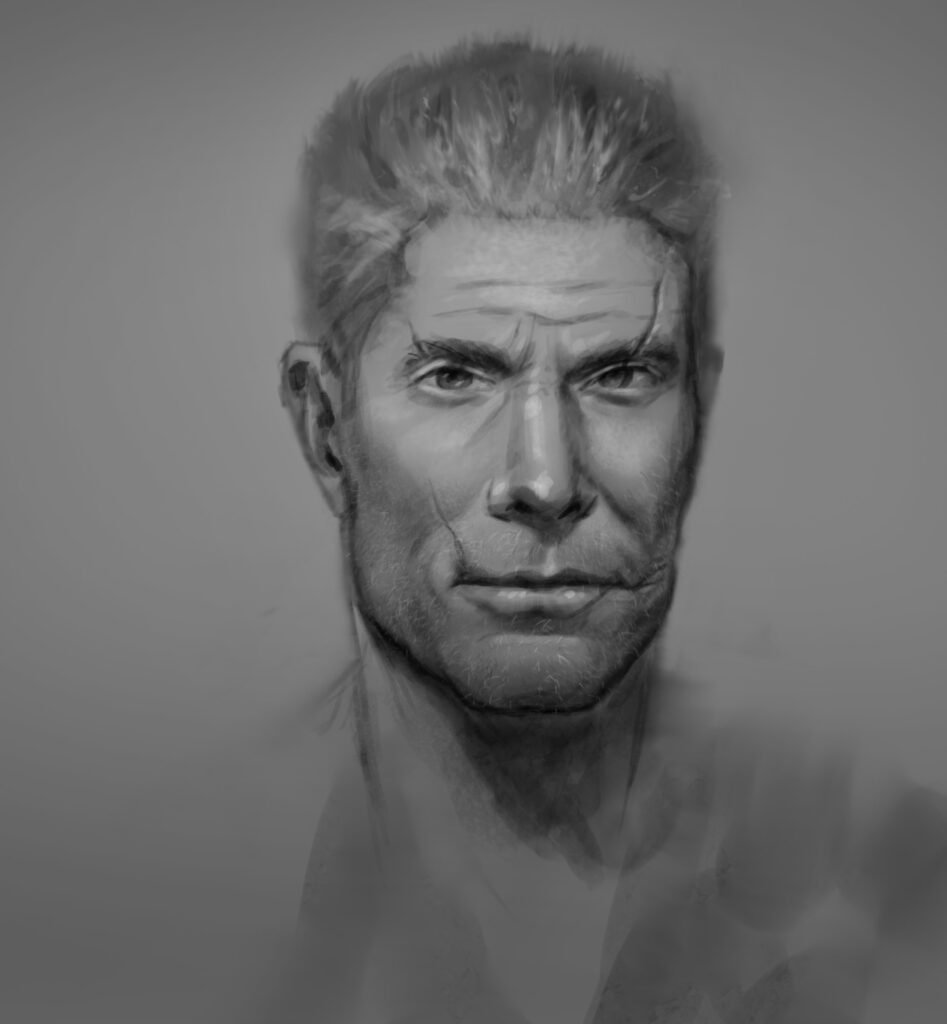
Canderous Ordo showing up is always a win.
As a MANDO guy, I love this part. Canderous brings that rough, old-warrior Mandalorian energy that makes every scene feel like someone is about to either tell a war story or punch a wall.
His connection with Revan matters because it ties back to the Mandalorian Wars, one of the biggest shadows hanging over the entire Old Republic era.
Revan did not just fight the Mandalorians.
He broke them.
And Canderous, later Mandalore the Preserver, is part of that legacy. Their scenes help remind you that Revan’s past is not a clean heroic myth. It is full of bodies, choices, and consequences.
Which is Star Wars at its best.
Not clean.
Not easy.
But absolutely loaded with drama.
Meetra Surik Deserves Respect
Meetra Surik, the Jedi Exile from KOTOR II, enters the story later, and I loved her here.
Could she have gotten even more?
Yes.
KOTOR II fans may always feel she deserved a bigger spotlight, and I understand that completely. But in this book, she still has weight. She is not just “the other game protagonist.” She feels loyal, brave, haunted, and deeply connected to Revan’s past.
Her presence makes the story feel bigger.
Revan is the legend.
Meetra is the wound left behind.
Together, they represent the cost of the Mandalorian Wars, the Jedi Civil War, and every terrible decision made by people who thought they were saving the galaxy.
Classic Star Wars.
Everyone is trying to save the galaxy.
Half of them make it worse.
Bastila Needed More Time
Here is my biggest complaint.
Bastila Shan deserved more.
She is important. She is Revan’s wife. She is carrying their child. She is one of the most important people in his life. But for much of the story, she gets left behind while Revan goes off chasing nightmares.
Now, story-wise, I get it.
But emotionally?
Come on.
Bastila is not some background NPC holding tea at the apartment. She is Bastila Shan. Battle Meditation. KOTOR icon. The woman who helped pull Revan back from darkness.
The book gives her strong emotional moments, but I wanted more of her.
That is probably the one reason this is not a 10/10 for me.
Darth Scourge Is Shockingly Good
Darth Scourge surprised me.
At first, you may want to rush through his chapters to get back to Revan. I get it. We came here for the mask, the legend, the big dramatic Old Republic nonsense.
But Scourge grows into one of the most important parts of the book.
He gives us the Sith Empire from the inside. He shows how dangerous, paranoid, and brutal that world is. Dark Council plotting, Sith politics, betrayal, murder, ambition — basically a family reunion if your family owns red lightsabers and no emotional support animals.
And then his role in the ending is massive.
His betrayal of Meetra and Revan is brutal, but it is not simple cowardice. He sees a future where the Emperor can only be defeated later. So he makes a terrible choice for what he believes is the long game.
That is very Sith.
Also very interesting.
Vitiate Is an Absolute Nightmare
Now we get to the real monster.
Darth Vitiate.
The Sith Emperor.
The planet-eating horror show himself.
This book made me appreciate Vitiate so much more. In SWTOR, he is this godlike enemy who hangs over everything for years. He is the Emperor, then the hidden voice, then the cosmic manipulator, then Valkorion, then eternal problem after eternal problem.
But Revan gives you the foundation.
It shows why he is so terrifying.
Nathema is the key.
Vitiate did not just conquer a planet. He consumed it. He stripped it of life. He ripped away the Force itself and turned the world into a dead wound in the galaxy.
That is not normal Sith behavior.
That is not “I am angry and want a bigger chair.”
That is cosmic horror.
After reading this, you understand why SWTOR spends so much time building Vitiate as the ultimate Old Republic villain. He is not just powerful. He is unnatural.
He is what happens when the dark side stops being ambition and becomes hunger.
The Ending Hits Hard
The final act is wild.
Revan, Meetra, Scourge, and T3-M4 confront the Emperor. For a moment, you think they might actually pull it off.
Then everything goes straight into the reactor shaft.
Scourge turns.
Meetra dies.
T3 is destroyed.
Revan is captured.
And the Emperor wins.
It is painful, but it works because we know SWTOR still has to happen. Vitiate cannot die here. His shadow has to stretch forward into the Jedi Knight story and beyond.
Revan’s fate is tragic, but also heroic. Even imprisoned, he resists the Emperor mentally for centuries, slowing him down, influencing events, and keeping the Republic alive longer than it ever realized.
That is Revan.
Even when chained, he is still fighting.
How It Makes SWTOR Better
This is where my 15 years of SWTOR brain kicks in.
The Revan novel makes the Jedi Knight storyline better.
It makes Scourge better.
It makes Vitiate better.
It makes the Emperor feel less like “generic MMO final boss voice” and more like a nightmare that has been building since KOTOR.
When Scourge joins the Jedi Knight in SWTOR, the book gives that moment more weight. You understand his betrayal. You understand his long game. You understand why he waited for a champion powerful enough to do what Revan and Meetra could not.
That connection is why this book still matters.
It is not just a side novel.
It is connective tissue.
Old Republic duct tape, but classy.
Final Verdict: Revan Is Essential Old Republic Reading
I loved Revan.
Not because it is flawless, but because it matters.
It gives Revan shape after KOTOR. It honors the mystery while explaining enough to make the larger story work. It brings in Meetra, Canderous, Bastila, Scourge, and Vitiate in a way that makes the Old Republic era feel connected.
Most importantly, it turns Revan into something bigger than a mask.
He is a hero.
He is a villain.
He is a legend.
He is a warning.
And somehow, after everything, he is still trying to save the galaxy.
That is why fans still care.
That is why SWTOR players should read it.
That is why KOTOR fans should at least experience it, even if they argue with parts of it afterward, because Star Wars fans arguing is basically our cardio.
Gungho Guns rating?
9/10.
One point off because Bastila deserved more time.
Everything else?
Fantastic Old Republic madness.
FAQs About the Revan Novel
Yes. If you love STAR WARS, KOTOR, KOTOR II, or SWTOR, the Revan novel is absolutely worth reading because it connects major Old Republic storylines.
You can understand the book without replaying KOTOR, but the story hits much harder if you know Revan, Bastila, Canderous, and the Star Forge.
Yes. The novel is one of the biggest bridges between KOTOR, KOTOR II, and SWTOR, especially through Vitiate and Darth Scourge.
Yes. Darth Vitiate, the Sith Emperor, is a major force in the novel and becomes one of the most terrifying parts of the story.
Meetra Surik joins Revan in his mission against the Sith Emperor, but she is killed after Darth Scourge betrays the Jedi.
Gungho Guns gives Revan a 9/10. It is essential Old Republic reading, with one point off because Bastila Shan deserved more focus.
Gungho Guns Sign-Off
Until the next forgotten holocron, this is Gungho Guns from MANDO — keep your mask polished, your memories mostly intact, and never trust a Sith Emperor with planet-sized hobbies.
TheMandoAde.com Fan Disclaimer
TheMandoade.com is written by fans, for fans, and claims no official affiliation with The Walt Disney Company, Lucasfilm Ltd., BioWare, Broadsword Online Games, Electronic Arts, Random House Worlds, Star Wars: The Old Republic, Star Wars: Knights of the Old Republic, Star Wars: Knights of the Old Republic II, Revan, or any of their affiliates.
The MANDO guild community claim no ownership or rights to any copyrighted materials connected to the Star Wars universe, Star Wars: The Old Republic, Star Wars: Knights of the Old Republic, Revan, or any related properties, characters, names, images, stories, logos, or designs. All rights belong to their respective owners.
Any use of Star Wars-related materials, SWTOR references, KOTOR references, Star Wars book references, screenshots, images, stock photos, names, or related content is intended for commentary, community discussion, entertainment, education, news, parody, review, and fan-based creative expression under applicable fair use principles.