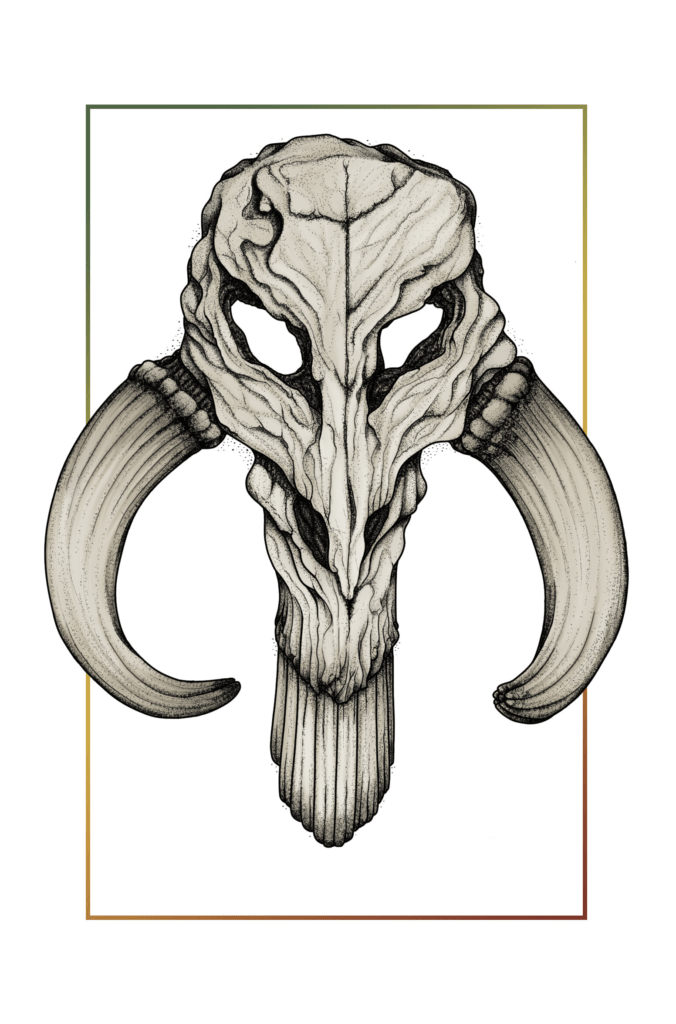
What is it that makes us Mandalorians?
“Out of every one hundred men, ten shouldn’t even be there, 80 are just targets, nine are the real fighters, and we are lucky to have them, for they make the battle. Ah, but the one, one is a warrior, and he will bring the others back.”
-Heraclitus
A Short History of the Mandalorians
“Mandalorians believe confrontation is required for growth, on the personal as well as the cultural level. War is the Mandalorian way of life.”
―Jedi Master Gnost-Dural
The ‘Mandalorians’ began as the humanoid Taung species from the planet Coruscant. Intense fighting with the thirteen Human nations of Coruscant known as the Battalions of Zhell began millennia before the Republic. When a powerful volcano nearly wiped out the humans and darkened the skies over Coruscant, the Taung came to call themselves the Dha Werda Verda—the “Warriors of the Shadow.”
Despite the volcano’s devastating effect, the Taung were eventually driven off Coruscant, taking refuge on the world of Roon. Led by the warlord known as Mandalore the First, they eventually conquered another planet in the Outer Rim in 7000 BBY, which they named Mandalore after their leader.
Known for thriving in battle, the Taung took on the name Mandalorians and were seen by many as the most skilled fighters in the galaxy. These Mandalorian Crusaders were known for their use of cutting edge weaponry and held themselves to a strict code of honor. They also wore unique armor, known simply as “Crusader Armor”, that differed from one soldier to the next. This simple historical context would be the foundation for what would eventually become a unique and well-known culture across the galaxy.
The Mandalorian Culture – “Honor as a Way of Life”
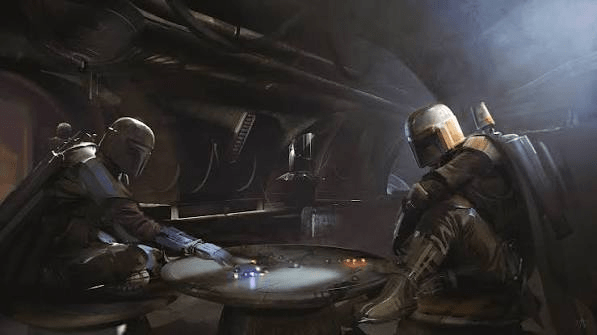
Daily Life and Death
“In five millennia, the Mandalorians fought with and against a thousand armies on a thousand worlds. They learned to speak as many languages and absorbed weapons technology and tactics from every war. And yet, despite the overwhelming influence of alien cultures, and the absence of a true homeworld and even species, their own language not only survived but changed little, their way of life and their philosophy remained untouched, and their ideals and sense of family, of identify, of nation, were only strengthened.”
―Mandalorians: Identity and Language
Early Mandalorian culture, originating with the ancient Taung species, was believed to have begun as a religious warrior society, whose sophisticated system of laws and customs would go on to become the Canons of Honor. War was practiced as a form of ritual worship to their multiple gods. However, following the destruction of the Nevoota, war itself became a god, personified by Kad Ha’rangir-“The Destroyer God”.
“I’m a Mandalorian…weapons are a part of my religion.”
In Mandalorian Mythology, Kad Ha’rangir represented the opportunity for change through destruction, and was eternally opposed by Arasuum, the personification of stagnation and inactivity. Because of this, many of the Mandalorians’ earliest conflicts were seen as holy wars and their warriors known as the Mandalorian Crusaders. By the end of the Great Sith War, the majority of the Taung had perished. As time had passed, the Mandalorians began accepting beings of other races and species into their fold. They began viewing those who joined them to be on equal footing to those who had been born into the culture.
This eventually transformed what it meant to be a Mandalorian. Having become a mixed group of beings from numerous worlds and species, those who considered themselves Mandalorian were bound by a single, unifying culture rather than any one race. Further, they came to believe that an individual was defined by their actions rather than the circumstances of birth.
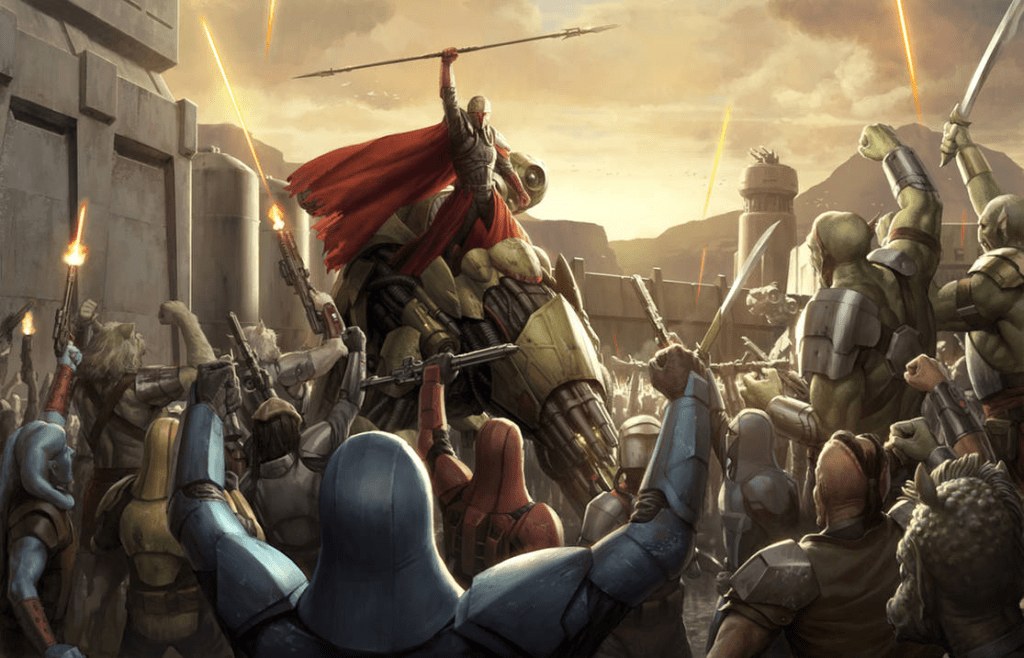
“Mandalorian is not a race…it’s a creed.”
Central to the Mandalorian culture were the Resol’nare, or the “Six Actions”. These six tenets defined what it meant to be a Mandalorian, and any who wished to be considered as such was expected to abide by them. The Resol’nare consisted of the following: the wearing of Mandalorian armor, speaking the Mandalorian language, defending oneself along with one’s family, contributing to the welfare of your clan, rallying to the Mand’alor when summoned, and raising one’s children in the Mandalorian ways.
In order to retain their heritage in the face of outside influence, Mandalorians placed a high value on rigorously carrying out the Resol’nare’s tenets in their daily life. However, individuals’ interpretation of the Resol’nare differed. At least one group of Mandalorians, the New Mandalorians, potentially followed an alternate interpretation of the Resol’nare by doing away with personally-owned sets of armor and refusing to aid the Mand’alor.
The Mandalorians have always been a nomadic people. The roots of this tradition trace back to the Mandalorian Crusader’s tendency to make conquered worlds their home. Even long after the conquest of Mandalore, the Mandalorians would hold on to these nomadic traditions. They did so partially out of attachment to the old ways, but also as a means to avoid presenting a single target to any enemy who would wish to wipe them out. Thus, Mandalorian communities have cropped up across the galaxy.
Further, there are many Mandalorians who have never even stepped foot on Mandalore. Mandalorian families never expect their current home to be permanent. Portability is desired over a large number of material possessions, and even the traditional Mandalorian dwelling known as a vheh’yaim was designed to be set up for temporary occupation and, either, easily deconstructed or abandoned.
While many cultures with a settled location celebrated events and festivals that were derived from the changing seasons of their homeworld, the Mandalorians’ nomadic customs have left them largely disconnected from these sorts of cycles. Though Mandalorians who come from Concord Dawn generally still mark the end of the planet’s harvest, on the whole, most Mandalorians have taken to celebrating mainly the events of the life cycle such as birth, a coming of age, marriage, and death.
Burials for the dead are also uncommon. This is due to both the inability for nomads to sustain cemeteries and the impracticality of bringing bodies along on the move. The Mand’alor would be given a proper burial as a sign of respect, unless they chose otherwise. Mass graves and cremation were common when a body could be recovered, with the ashes of those cremated usually scattered, and one of the fallen’s possessions—often their armor—kept in memorial. If, however, a full set of armor couldn’t be recovered, it was commonplace to, instead, retrieve smaller parts such as helmets, gloves, or plates.
It was also Mandalorian custom to recite the names of loved ones and friends who have passed each night before sleep as a means of keeping their memory alive. The uncertainty of life meant that most Mandalorians celebrated the time they had together at every opportunity by taking part in communal singing, drinking, and simply by enjoying time with family. The concept of aay’han was a Mandalorian term that encompassed the joy of time spent with loved ones while remembering those who were no longer among the living, relatively similar to the Basic term “bittersweet”.
The ancient Mandalorian Crusaders and their Neo-Crusader replacements lived and thrived on war, seeking conflict, and attaining glory through conquest. But following the end of the Mandalorian Wars, many Mandalorian soldiers would become bounty hunters and mercenaries, selling their services to the highest bidder. This mercenary trend would become a part of the culture for thousands of years to come, and many in the galaxy saw the Mandalorians as little else.
However, while mercenary work and bounty hunting would be a primary means of income for the Mandalorians, there were a wide assortment of other jobs Mandalorians typically took on. Several Mandalorians earned their living as weaponsmiths, or even as bodyguards for the host population of the worlds upon which they lived.
Others remained in the Mandalore sector, toiling in workshops and factories, or working the land as farmers. Several Mandalorians on Mandalore worked what might be considered “domestic” occupations, tending bars and running shops, as well as working as doctors and veterinarians. Despite the wide array of professions Mandalorians took, every Mandalorian was combat trained and they could band together into an army on short notice.
In addition to the general misconception that all Mandalorians were mercenaries, Mandalorians were also considerably more sociable than many would expect. As long as individuals spoke their mind and said what they meant, accepted a meal when offered—as an offered meal was a great compliment for a nomadic society that ofttimes lived hand to mouth—looked them straight in the eye or the horizontal section of their visor when wearing a helmet, took off their boots when entering their home, paid their debts, fussed over their children, never made a pass at a Mandalorian of the opposite sex unless the individual planned to become part of the culture, and respected the elderly—as any Mandalorian who has reached such an age would be an exceptional warrior—anyone who encountered a Mandalorian outside of combat was unlikely to come to harm.
Mandalorian Culture and The Canons of Honor – “The Tie That Binds Us”
The Canons of Honor were composed of no fewer than four simple facets of life: Strength, Honor, Loyalty, and Death. To a Mandalorian, strength was equated with life. The strong had the right to rule and conquer the weak. If an opponent fought back then they were not seen as weak, even if they could not defeat the Mandalorians; the act of defending oneself instead of capitulation was seen as giving one both spiritual strength and honor.
To the Mandalorian, honor was very important. Honor was gained by fighting, no matter the odds, circumstances, or situation. Once battle was engaged, victory brought honor. And while defeat was not desirable, even fighting and losing gave honor to the defeated for at least they acted and fought. It was considered more honorable to die fighting than to survive through dishonorable means.
Equally important to honor was loyalty to one’s clan. A Mandalorian was required to fight not only for his Mand’alor, but also for his aliit. If one’s actions did not bring honor to his clan, then they held no place for being a member of that clan, or a Mandalorian, and became what Mandalorians called dar’manda.
Death was another important part of the code. Everyone dies. But what mattered to the Mandalorian Warrior was how a person dies. Did they pass on with Strength and Honor, or some other way?
The Code of the Mandalorian:
Strength is life, for the strong have the right to rule.
Honor is life, for with no honor one may as well be dead.
Loyalty is life, for without one’s clan one has no purpose.
Death is life, one should die as they have lived.
Resol’nare – The 6 Actions Explained
“You will raise your young as Mandalorians — and defend them. You will wear our armor, and speak our language. And you will serve the clan, and rally when called. These are the Resol’nare — the Six Actions — sacred to our movement. Do them — and you may live to call yourselves Mandalorians!”
— A Mandalorian Rally Master
In addition to the Code of Honor, all Mandalorians followed this short list of six essential actions or behaviors that defined the culture itself. These Six Actions comprised the core tenets of being a Mandalorian:
- Wearing armor.
- Speaking the language.
- Defending yourself and your family.
- Raising your children as Mandalorians.
- Contributing to the clan’s welfare.
- When called upon by the Mand’alor, rallying to his cause.
As such, anyone who wished to be considered Mandalorian had to abide by these guidelines and live these actions daily. Mandalorians that did not follow the Resol’nare were considered to be dar’manda — someone who was ignorant of their Mandalorian heritage. The status of dar’manda was widely feared within Mandalorian society due to the belief it meant they were soulless and had no place in the Manda, the Mandalorian afterlife.
Unlike the Mandalorian Wars, captured worlds were not forcibly inducted into Mandalorian culture, and were free to coexist with the Protectors. In instances such as this, the Mandalorians became a form of a local police force for these territories, protecting their investments from outside threats.
Young Mandalorian children were taught a rhyme to help them learn the tenets of the Resol’nare:
Ba’jur, beskar’gam,
Ara’nov, aliit,
Mando’a bal Mand’alor—
An vencuyan mhi.
It is translated in Basic as:
Education and armor,
Self-defense, our tribe,
Our language, our leader—
All help us survive.
An Exposition on The Canons – From The Mandalorian Perspective
Resol’nare (The Six Rules) – “What it means to us” – Explained by Drenn Carr
1. Wear Armor
When people see you, they see your beskar’gam. They see a Mandalorian ready for battle. The one differentiating quality between a Mandalorian and everyone else is our battle armor. It’s a symbol.
You wear the armor to show that you’re in a world where you must be ready to fight at any time and that you don’t trust anyone else. You only show your face to those you trust… and you only trust your family… your clan… and maybe some friends. Maybe.
Somebody that you don’t trust sees your face? So what? Just be ready to kill them if you have to. By the way, it’s also just common freaking sense to wear body covering armor and a face concealing helmet in a galaxy full of surveillance equipment when you’re in public.
2. Speak our language
Want to be Mandalorian? Speak Mando’a. Until you can talk and understand the basics… you’ll never be one of us. You don’t have to be fluent if you didn’t grow up amongst us, but learn as much as you can and USE IT.
3. Defend Yourself and Your Family
Somebody messes with you? You stop them; preferably kill them. Somebody messes with your family? Same deal. Kill enough of them, they’ll eventually learn to leave us alone.
4. Raise Your Kids to Be Mandalorian
Take care of your kids and teach them. If you don’t you won’t be one of us for long. You also probably won’t be breathing because we’ll kill you. If you don’t want to be killed for not raising your kids, don’t breed.
5. Contribute to the Welfare of your Clan
Get a job, earn money, buy yourself and your family the stuff they need and want. However, if somebody in your clan needs something, help out. • They hungry? Feed ’em. They need a weapon? Give ’em one of your spares. They need money? Put ’em to work for you. Clan needs to buy something big? Give what you can.
6: If the Mand’alor calls, you go
When the Mand’alor calls, you drop what you’re doing and go fight until you win or die. Sometimes the Mand’alor calls off the Crusade… don’t count on it.
Other Mandalorian Cultural Norms and Traditions – Explained by Drenn Carr
(These aren’t really part of the Resol’nare, but they’re traditions of ours and we like our traditions.)
1. Rite of Passage – Verd’goten- “How do we do it?”
- Hit puberty for your race. Mandalorians come from all races of the galaxy, whatever is puberty for yours is what counts.
- Make your own armor. Some of us only wear what we make and fix ourselves.
- Most of us always at least wear a helmet we made ourselves. Yeah the smooth faced “T” visor thing is kinda the Mandalorian custom. Traditionally we try and make the helmet have that look but it’s not a requirement. Function is more important than form… but form is nice too.
- Usually we try to make it out of beskar (Mandalorian iron)… not a requirement.
- Kill something to show that you’re not useless (aka “the blooding”). Your clan leader will tell you what this needs to be.
2. Everybody Fights
- Want to be a farmer? Farm. Want to be a singer? Sing. Want to be a trader? Trade. But never forget you’re Mandalorian. First and always we are warriors above all else regardless of how we choose to make money.
3. Experience Leads
- We don’t do “ranks” – you’re either the Mand’alor or you’re one of the Mando’ade. However, in battle there needs to be a chain of command – so whoever is the most qualified to lead a particular mission leads. If there’s a question, the overall operational commander makes the call and so on right up to the Mand’alor or your clan head. Once made, you stick to it until the mission is over.
4. Manners
- Speak your mind.
- Look the person you’re talking to in the eye (or eye visor slit).
- If you’re a guest in a Mandalorian home (where they raise their kids), take off your boots.
- Feed your guests, and guests…eat what’s offered as it’s very polite.
- Pay your debts.
- Fuss over your kids.
- Respect the elderly.
5. Mercenary Work
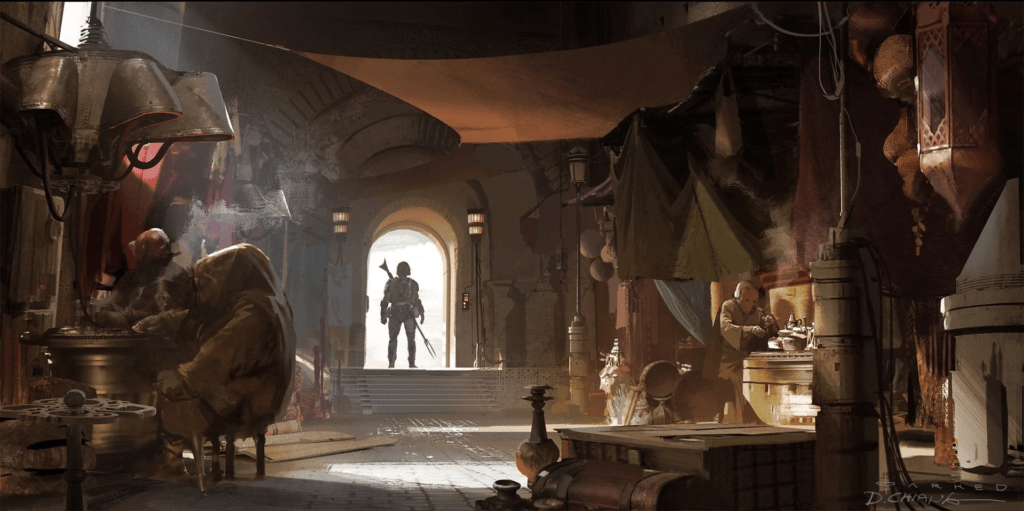
- We’re all warriors and there’s really only a couple of ways to make good money as a warrior… mercenary work. This includes all forms including contract security, bodyguard duties, or bounty hunting. Basically you get paid to fight… what’s not to love? We really only have a handful of traditions regarding merc-work:
- Once you accept the job, for anything that’s not expressly in the contract … YOU decide how it’s done, not your employer.
- If your employer adds terms and conditions to the job, they must make it clear beforehand.
- Do the job you’re paid to do, no more, no less.
- Body-count is not necessarily a sign of a job well done. If you’re paid to kill one man, a perfect mission kills one man. However sometimes we have to clear the way to the target and, then, clear our path off-world… such is life. Make sure they know it was a Mandalorian that killed them.
- If you abort the job for any reason, the employer gets back any money or equipment they put up front. A Mandalorian always pays his debts.